Key Takeaways
A short squeeze occurs when a rapid price increase forces short selling traders to close their positions by buying, which pushes the price even higher in a cascading feedback loop.
Short squeezes are especially common in crypto derivatives markets, where high leverage means relatively small price moves can trigger widespread forced liquidations.
Key warning signals include rising open interest with a flat or declining price, deeply negative funding rates on perpetual futures, and an elevated long/short ratio skewed toward shorts.
The most effective protection against short squeezes is conservative position sizing and low leverage, not stop-loss orders which can worsen outcomes by adding buy pressure during a squeeze.
Short squeezes are market structure events, not technical analysis patterns. They are driven by positioning dynamics, forced liquidations, and order book depth rather than chart formations.
Introduction
Short selling is a trading strategy where a trader borrows an asset and sells it, hoping to buy it back later at a lower price. It is commonly used to manage downside risk, hedge existing holdings, or express a bearish view on the market. Short positions can be opened through margin trading or via futures contracts.
However, shorting carries unique risks. In spot short selling, where a trader borrows and sells an asset, losses are theoretically unlimited because there is no ceiling on how high a price can rise. In derivatives markets, where most crypto shorting takes place, positions are automatically liquidated when they reach the liquidation price, so losses are capped. Yet even in derivatives, the speed and violence of a short squeeze can inflict heavy damage before liquidation triggers kick in.
Understanding the mechanics of a short squeeze is important for anyone using short positions, whether as a directional trade or as part of a broader hedging strategy. Recognizing the warning signs before a squeeze develops can help traders manage their exposure more effectively.
What Is a Short Squeeze?
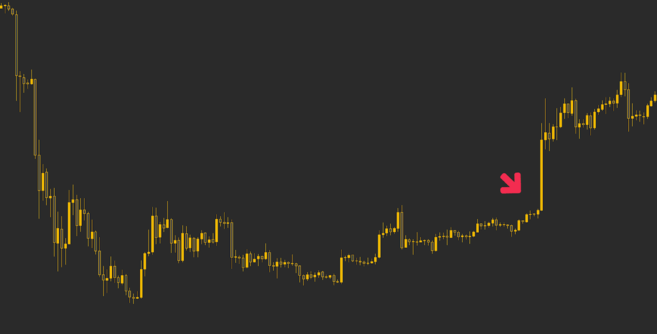
A short squeeze happens when an asset's price rises sharply, forcing many short sellers to close their positions at the same time. Since closing a short position requires buying the asset, the collective buying pressure pushes the price even higher, creating a self-reinforcing cycle.
When a trader opens a short position, they are betting the price will decline. If the price rises instead, their position accumulates unrealized losses. As losses grow, some traders hit their stop-loss levels, while others face forced liquidation. Traders who are not yet stopped out may also choose to close manually to limit further damage.
Each of these actions requires a buy order. As those buy orders accumulate, they add more upward pressure to the price, potentially triggering additional liquidations. This cascading effect is what makes short squeezes so sudden and violent. A squeeze can unfold in minutes or hours, with the price moving far beyond what fundamentals might suggest.
The opposite of a short squeeze is a long squeeze, which occurs when holders of long positions are forced out by cascading selling pressure, driving the price sharply downward. Long squeezes follow the same mechanics in reverse and tend to happen after extended rallies when many traders are heavily leveraged long.
How Does a Short Squeeze Happen?
A short squeeze typically requires three key conditions: a large concentration of short positions, relatively thin order book liquidity, and a catalyst that pushes the price upward against those positions.
When many traders are short on the same asset, the market sentiment is heavily bearish. Any unexpected price increase can trigger stop-losses and forced liquidations simultaneously. As those positions close through buy orders, trading volume spikes sharply, further accelerating the price move.
The larger the pool of short positions relative to available liquidity, the more explosive a potential squeeze becomes. If there are far more short positions than long positions, a large pool of potential buy orders is waiting to be triggered. This is why monitoring the long/short ratio can help gauge squeeze risk.
Thin liquidity makes this dynamic worse. In a market with deep order books, buy orders from short covering can be absorbed without moving the price dramatically. But in a market with shallow order books, even a modest wave of short covering can send the price surging, triggering more liquidations in a feedback loop.
Catalysts that can spark a short squeeze include positive news announcements, large spot purchases by institutions, favorable regulatory developments, or simply a technical bounce after an extended decline. Often, the initial catalyst is relatively minor but the positioning imbalance amplifies the reaction far beyond what the news alone would justify.
Short Squeezes in Cryptocurrency Markets
Short squeezes are particularly common in crypto because derivatives exchanges often allow very high leverage. A trader using 10x leverage on a short position can be liquidated by an adverse price move of roughly 8–10%, depending on the maintenance margin requirement.
At 5x leverage, liquidation typically occurs at roughly 16–20%. Given that Bitcoin and many altcoins can move 5% or more in a single trading session, the conditions for squeezes arise frequently.
Crypto markets also trade 24/7, meaning there is no market close to allow positions to settle or for traders to reassess. A squeeze that begins during low-liquidity weekend hours can be especially severe because there are fewer market participants to absorb the buying pressure.
Short squeezes are not limited to Bitcoin. Altcoins and tokens with smaller market capitalizations tend to have thinner order books and lower spot liquidity, making them more susceptible to violent squeezes when short positioning becomes overcrowded.
A token with a market cap under $100 million and high derivative open interest relative to its spot volume can experience extreme price spikes if short sellers are caught offside.
Key Indicators for Identifying Short Squeeze Risk
Open interest
Open interest measures the total number of outstanding derivative contracts. When OI is rising while the price is flat or declining, it often signals that traders are building short positions. A sudden drop in OI accompanied by a sharp price spike suggests that leveraged positions are being forcibly closed, which is characteristic of a squeeze. Comparing OI to an asset's spot market capitalization can also provide valuable context for how stretched the derivatives market has become.
Funding rates
Funding rates on perpetual futures contracts reflect the balance between long and short demand. Deeply negative funding rates indicate that short sellers are dominant and are paying longs to maintain their positions. Historically, extremely negative funding rates have preceded short squeezes because they signal overcrowded bearish positioning. When funding stays negative for an extended period while the price refuses to decline further, it can suggest that spot buying pressure is absorbing the short-side flow, setting up conditions for a squeeze.
Long/short ratio
The ratio of long to short positions provides a snapshot of market positioning. When shorts significantly outnumber longs, the market is primed for a squeeze because there is a large pool of short positions that may need to be closed quickly if the price moves against them. This metric is most useful when combined with OI and funding rate data, as no single indicator tells the full story.
Notable Short Squeeze Examples
Short squeezes happen across all financial markets, not just crypto. In equities, they typically occur when a company has low market sentiment, a high stock price relative to perceived value, and a large number of outstanding short positions.
Tesla (TSLA) was one of the most heavily shorted stocks in history during 2019 and 2020. As the stock price rose sharply, short sellers were repeatedly forced out of their positions, contributing to the stock's dramatic appreciation over that period.
The GameStop (GME) event in January 2021 became one of the most widely discussed short squeezes in financial history. Retail traders on social media platforms collectively bought shares and call options on a heavily shorted stock, triggering a squeeze that pushed the price from roughly $20 to an intraday high above $480 within weeks.
In crypto, a notable short squeeze occurred in early 2019 when Bitcoin was trading in a tight range around $3,500 to $4,000 after a prolonged decline. Sentiment was heavily bearish, and many traders had short positions open. In early April, the price suddenly broke upward with such speed that the previous trading range was not revisited until the March 2020 market crash.
Altcoin short squeezes are also common, particularly on tokens where derivatives open interest is high relative to the asset's market cap. When a smaller-cap token attracts heavy short positioning and then receives unexpected positive news, the resulting squeeze can produce price moves of 50% or more within hours.
FAQ
What is the difference between a short squeeze and a liquidation cascade?
A short squeeze specifically targets short positions, occurring when rising prices force short sellers to buy back their positions. A liquidation cascade is a broader event that can affect both long and short positions across multiple assets and can involve large-scale forced closures. A short squeeze is often part of a liquidation cascade, but not all cascades are short squeezes.
Can you predict when a short squeeze will happen?
While no one can predict market moves with certainty, monitoring open interest, funding rates, and the long/short ratio can help identify conditions where a squeeze is more likely. Deeply negative funding rates combined with rising open interest and a price that refuses to decline further are often warning signals of a potential squeeze setup. However, these conditions can persist for extended periods without a squeeze materializing.
How can I protect myself from a short squeeze?
The most reliable protection is conservative position sizing and low leverage because smaller positions can withstand larger adverse moves. Stop-loss orders, while useful for managing individual trade risk, add buy orders during a squeeze and can get filled at significantly worse prices than expected due to slippage. Other protective measures include avoiding short entries when the market is already heavily positioned short, monitoring risk management practices, and considering whether a long squeeze might present a more favorable setup if the market is overwhelmingly bearish.
Are short squeezes more common in crypto than in stocks?
Short squeezes tend to be more frequent and intense in crypto markets because of several structural factors: higher available leverage (often 10x to 100x compared to typical stock margin of 2x), 24/7 trading with no market closures to allow positions to settle, higher baseline volatility, and thinner order book depth on many assets. These conditions make cascading liquidations more likely in crypto derivatives than in traditional equity markets.
What is a long squeeze?
A long squeeze is the mirror image of a short squeeze. It occurs when a sudden price drop forces long position holders to sell or get liquidated, creating cascading selling pressure that pushes the price further down. Long squeezes are most common after extended rallies when many traders are heavily leveraged long, and they follow the same mechanical pattern as short squeezes, just in the opposite direction.
Closing Thoughts
Short squeezes happen when heavy short positioning meets a price catalyst, triggering a chain reaction of forced buy orders that can push prices far beyond what fundamentals would suggest.
In crypto derivatives markets, where high leverage and 24/7 trading are standard, squeeze conditions can develop quickly and resolve with remarkable speed. Monitoring open interest, funding rates, and the long/short ratio helps traders recognize when the market is leaning heavily in one direction.
The most effective approach to managing squeeze risk is not trying to predict every squeeze but maintaining conservative position sizing and leverage levels that can survive adverse moves. Whether you are considering a short position or looking for opportunities on the long side, understanding the dynamics of short squeezes is an important part of navigating volatile markets.
Further Reading
What Are Stop-Loss and Take-Profit Levels and How to Calculate Them?
What Are Isolated Margin and Cross Margin in Crypto Trading?
Disclaimer: This content is presented to you on an "as is" basis for general information and educational purposes only, without representation or warranty of any kind. It should not be construed as financial, legal, or other professional advice, nor is it intended to recommend the purchase of any specific product or service. You should seek your own advice from appropriate professional advisors. Where the content is contributed by a third party contributor, please note that those views expressed belong to the third party contributor, and do not necessarily reflect those of Binance Academy. Digital asset prices can be volatile. The value of your investment may go down or up and you may not get back the amount invested. You are solely responsible for your investment decisions and Binance Academy is not liable for any losses you may incur. For more information, see our Terms of Use, Risk Warning and Binance Academy Terms.