Disclaimer: This article is for educational purposes only. Binance has no relationship to these projects, and there is no endorsement for these projects. The information provided through Binance does not constitute advice or recommendation of investment or trading. Binance does not take responsibility for any of your investment decisions. Please seek professional advice before taking financial risks.
TL;DR
The metaverse is growing at a rapid rate. Projects keep developing and connecting to help bring more aspects of our digital life together. Blockchain is already playing a critical role in this development.
BNB Smart Chain (BSC) is home to a large number of metaverse projects. These include RPG games like Cyber Dragon and Alien worlds, the metaverse universe SecondLive, and even a player-owned Casino called decentral.games. Collectible card games like TopGoal also have a place in the metaverse.
On the Ethereum blockchain, Decentraland and the Sandbox provide similar metaverse experiences where users can create a digital identity, purchase land, and trade NFTs on NFT marketplaces. Their combination of work, life, and play even lets players take part in play-to-earn DeFi economies. By interacting with and playing the game, users have the potential to generate an income. Bloktopia provides a similar experience set across 21 floors of a digital skyscraper. Users can trade and rent real-estate space on each floor to generate an income.
While the Enjin project doesn’t yet offer a 3D virtual reality universe to explore, it does provide the tools for creating in-game NFT assets. NFTs are another important part of the metaverse as they can create digital collectibility. Through Enjin, users create liquid NFTs that can be broken down into ENJ tokens at any point.
Introduction
2021 has been a massive year for blockchain and crypto. From meme coins to bull runs and NFTs, the industry has constantly made headlines. The year's final half has brought us another trend: the metaverse. With the goal of combining our real-world social lives, work, and immersive technology, the metaverse has captured the public's imagination. Even though the metaverse is still in its early days, crypto is already playing a central role. Let's dive into some of the blockchain projects helping bring about this new digital future.

Why are crypto and blockchain important for the metaverse?
To understand how important crypto and blockchain are for the metaverse, let's briefly recap what the metaverse is. The metaverse is a connected, online universe explorable via 3D avatars. Users can work, socialize, create, and learn all in one place. Think of it as the next evolution of the internet experience.
While the web has PayPal and card payments, the metaverse has crypto to help create a digital economy. Blockchain has proven to be a useful technology for six key metaverse areas: digital proof of ownership, digital collectibility, transfer of value, governance, accessibility, and interoperability. Blockchain technology provides a transparent and cost-effective solution, making it an ideal fit for the metaverse. You can explore these six areas in more detail by heading to our What Is the Metaverse?. Let's take a look at how it's applied to metaverse projects across different blockchains.
Metaverse projects on BNB Smart Chain
A huge amount of development has occurred on BNB Smart Chain when it comes to the metaverse. Projects range from collectible card games with real-life players like Top Goal to RPG-style universes in Cyber Dragon and Alien Worlds. There is even a player-owned casino, decentral.games, and a classic metaverse VR project hosting events called SecondLive. You can read our selection of 5 BSC Metaverse Projects You Should Know to find out more about what BSC has to offer.
What is The Sandbox (SAND)?
The Sandbox is a blockchain game where users explore a virtual world containing NFTs (non-fungible tokens), user-created environments, and other content. Founded as a mobile game in 2011, The Sandbox has developed into a complex game on Ethereum using Ether (ETH), and the token SAND to power its in-game economy.
Players create their own avatar and digital identity, a key concept for the metaverse. An avatar can be associated with a crypto wallet to manage a player's NFTs, SAND tokens, and other blockchain assets. A player can even create games and virtual items using the VoxEdit and Game Maker tools. These powerful programs can create complex and professional video game assets, which you can then turn into NFTs. As users can trade these items, this has developed a play-to-earn model where users can make extra income by playing The Sandbox.
What is Decentraland (MANA)?
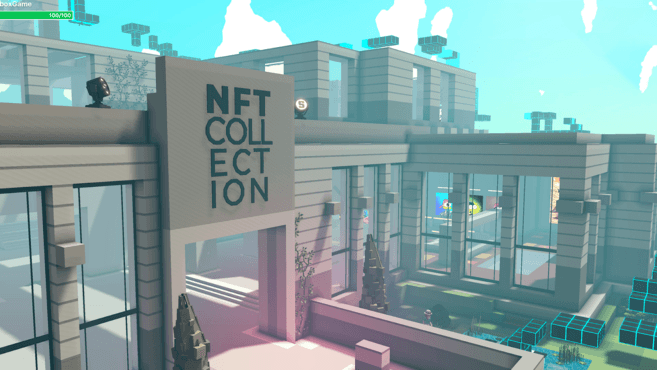
Decentraland is a 3D universe where players develop their plots of land, host events, create content, and engage in other social activities. The core economy of Decentraland is based on blockchain to establish digital identities, ownership, and rarity for unique items. It's one of the most famous and well-known projects predating the big metaverse craze in late 2021.
Founded in 2016, Estaban Ordano and Ari Meilich took a basic 2D game and grew it into a large world with NFTs worth hundreds of thousands of dollars. The project also has its own ERC-20 utility token MANA.
So how does Decentraland slot into the metaverse? Well, it ticks a lot of the metaverse boxes: a 3D interface, a digital economy, social elements, and in-game events. With more projects connecting to Decentraland, it also has the aspect of a metaverse hub. Decentraland is also particularly famous for its virtual real estate NFT called LAND. Along with providing voting power in Decentraland's decentralized autonomous organization (DAO), LAND has seen a huge rise in its price, making it popular among traders and investors.

What is Enjin (ENJ)?
Enjin is a blockchain platform focused on the creation of NFTs used as in-game items. The project has released software development kits (SDKs) to make generating Ethereum-based NFTs simple for the average user. As NFTs have already become a key part of the metaverse, Enjin has looked to create a more secure way for people to mint them.
A common complaint about NFTs is that they can be illiquid. You need to find a buyer for your NFT, which can take time. However, an Enjin NFT can always be melted in return for ENJ coins. This means that NFTs will always have some value, as long as the price of ENJ doesn’t reach zero. Since there's no need to wait for a buyer, converting NFTs to ENJ can provide instant liquidity. By helping support digital collectability and scarcity, Enjin looks to be a useful part of the metaverse.
What is Bloktopia (BLOK)?
Bloktopia is another VR metaverse game set in a skyscraper with 21 floors. Similar to Decentraland and The Sandbox, Bloktopia aims to be a hub for events, socializing, work, and more. The 21 floors represent Bitcoin's maximum supply of 21 million BTC. The project uses the Polygon blockchain to support its four main aspects: learn, earn, play, create.
1. Learn - Bloktopia will act as a gateway for users to learn about blockchain and how it's helping power the metaverse. It provides a more accessible and interactive way to learn about crypto.
2. Earn - Bloktopia embraces the play-to-earn model with its native token BLOK, virtual real-estate known as Reblok, and advertising opportunities with Adblok.
3. Play - Users should be able to socialize with friends online and enjoy a wide variety of user-build games and content.
4. Create - Bloktopia provides the tools for its gamers to create environments and even digital ad spaces.

Play-to-earn has become a hot topic in the gaming metaverse. The idea of earning income through playing and interacting with games is hugely attractive. While Decentraland and The Sandbox present a simple method for selling real estate, Bloktopia takes it further. Each Reblok floor can be rented to tenants or hired for a single event. Users can also generate advertising revenue as other players spend time on their level.
Closing thoughts
There is still a long way to go in the development of the metaverse. If you play the projects for yourself, you can see that the mechanics, look, and feel are quite basic. Many are still in the planning stages and not even available to test.
However, one thing for certain is that the number of new projects keeps increasing. No matter if it’s a large gaming company or a small metaverse crypto project, development is happening rapidly. The projects mentioned above are only a starting place, so regularly check for updates and news to keep up to date with the evolving metaverse.
Disclaimer: This article is for educational purposes only. Binance has no relationship to these projects, and there is no endorsement for these projects. The information provided through Binance does not constitute advice or recommendation of investment or trading. Binance does not take responsibility for any of your investment decisions. Please seek professional advice before taking financial risks.